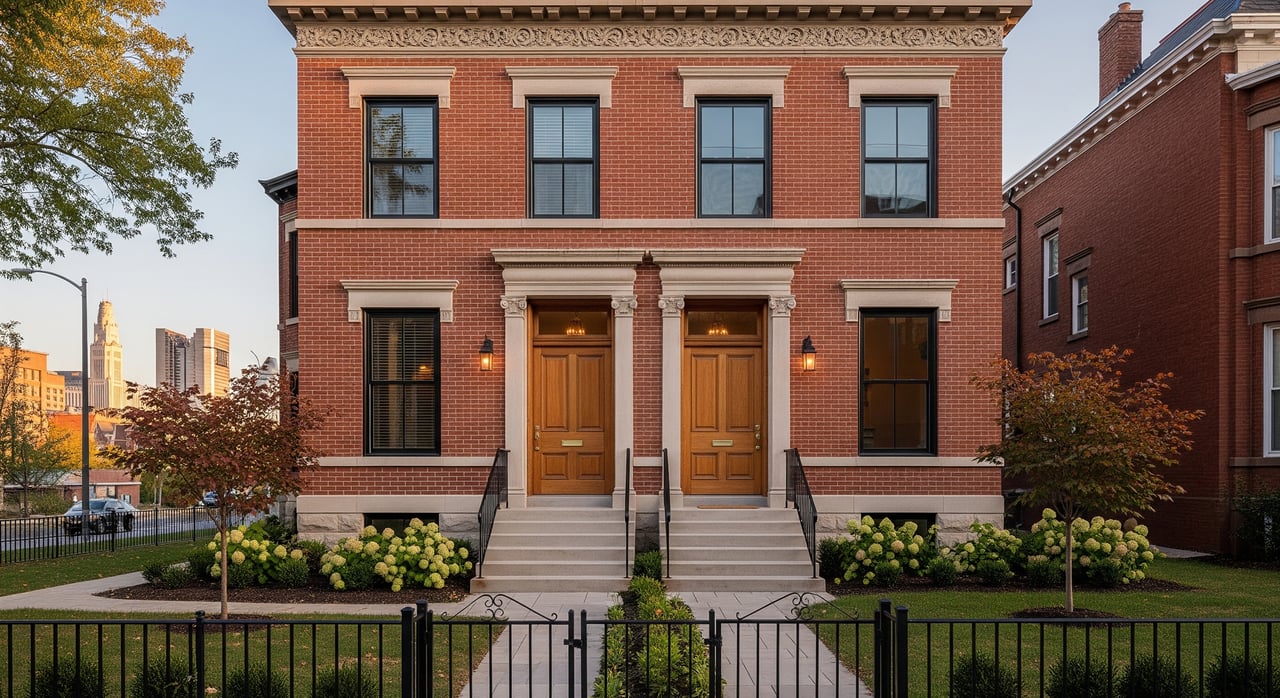
Thinking about buying a duplex in Columbus but not sure where to start? You are not alone. Many first-time investors and house hackers choose duplexes to build equity, offset living costs, and grow steady rental income. In this guide, you will learn where duplexes are common in Franklin County, how to run the numbers, what loans to consider, and the key legal steps to stay compliant. Let’s dive in.
Why Columbus for duplexes
Columbus has a broad job base and steady population growth that supports rental demand across the metro. Large employers, healthcare, finance and insurance, logistics, and technology firms all draw renters year-round. You also see strong demand from students and young professionals near The Ohio State University and downtown job centers.
For investors, this diversity can reduce vacancy risk when you choose areas close to employment and transit. A duplex lets you capture that demand on a manageable scale, whether you plan to house hack or operate it as a traditional rental.
Where duplexes cluster
Neighborhood overview
You will find many 2 to 4 unit properties in the University District near OSU, as well as in older streetcar-era and inner-ring neighborhoods. Examples include parts of South Linden and North Linden, Hilltop, Franklinton, Driving Park, the Near East Side, and several West Side pockets. Historic cores like German Village, Victorian Village, and parts of the Short North tend to have higher prices and fewer entry-level duplex options.
Always verify current neighborhood boundaries and price tiers before you compare deals. Conditions can change block by block in transitional areas, which affects rents, turnover, and rehab scope.
Match the area to your plan
Start by mapping your strategy to the location. Student-dominated areas can offer strong rent potential but often have higher turnover and seasonal leasing. Areas near major job centers and transit corridors tend to attract working professionals with more stable lease cycles. If you want to house hack, consider commute times, parking, and unit privacy before you buy.
Run the numbers
Key metrics
- Gross Rent: total expected annual rent for both units.
- Vacancy Allowance: budget 5 to 10 percent of gross rent for a stable market. Use a higher figure in higher-turnover areas.
- Effective Gross Income (EGI): Gross Rent minus Vacancy plus other income, such as parking or laundry.
- Operating Expenses: property taxes, insurance, owner-paid utilities, repairs and maintenance, management fees, landscaping, marketing, legal and accounting, and supplies.
- Net Operating Income (NOI): EGI minus Operating Expenses.
- Cap Rate: NOI divided by purchase price. Use cap rates to compare market yields.
- Cash-on-Cash Return: annual pre-tax cash flow divided by total cash invested.
- Gross Rent Multiplier (GRM): purchase price divided by gross annual rent. Use GRM as a quick screen.
- Debt Service Coverage Ratio (DSCR): a lender metric that compares NOI to annual debt service. Owner-occupant loans for 2 to 4 units may rely more on your income plus recognized rental income.
Conservative assumptions
- Vacancy: 5 to 10 percent, adjusted for the neighborhood and tenant mix.
- Maintenance and Repairs: 5 to 10 percent of EGI as a baseline, plus a per-unit annual reserve that reflects property age.
- Property Management: 8 to 12 percent of collected rent if you hire a professional manager. Self-management reduces cost but adds time and skill requirements.
- Capital Expenditures: plan for periodic big-ticket items like roofs, HVAC, and windows with multi-year reserves.
Example underwriting workflow
- Step 1: Start with gross annual rent from the rent roll.
- Step 2: Subtract a vacancy allowance, for example 7 percent.
- Step 3: Subtract operating expenses, using current Franklin County tax values and realistic insurance and utility estimates.
- Step 4: Calculate NOI. Divide by the purchase price to see the cap rate.
- Step 5: Add projected financing costs to estimate pre-tax cash flow and cash-on-cash return based on your down payment and acquisition costs. Model downside cases, such as a higher vacancy or a major repair in year one.
Financing options
Owner-occupant loans
If you plan to live in one unit, you can often access more flexible financing. FHA financing permits 2 to 4 unit properties when you occupy one unit as your primary residence. FHA offers a low minimum down payment for eligible borrowers, but requires mortgage insurance and the property must meet condition standards. Conventional programs also allow 2 to 4 units for owner occupants, though down payment, mortgage insurance, and underwriting can differ from single-family loans. Many owner-occupied products require that you live in the property for about 12 months.
Investor loans
For non-owner-occupants, conventional investor loans typically require larger down payments and analyze rental income differently. Many local community banks and credit unions offer portfolio loans with terms tailored to small multifamily. Compare options across at least two or three lenders to gauge rates, required reserves, and underwriting approach.
Ask your lender
- Which loan products fit a 2-unit property for my situation?
- What down payment, mortgage insurance, and cash reserve levels are required?
- How will in-place or market rents be counted in underwriting, and what proof is needed?
- Are there owner-occupancy requirements, and for how long?
- Are there prepayment penalties or covenants specific to multifamily loans?
Legal and compliance
Zoning and use
Confirm the property is legally a duplex. Check Columbus zoning and the Certificate of Occupancy to verify legal use and unit count. If a property was converted to multiple units without permits, you may face fines, required work, or limits on renting.
Registration and codes
Many cities require rental registration, licensing, or periodic inspections. Review Columbus rental registration and housing code rules before you list a unit or start work. For properties built before 1978, follow federal lead-based paint disclosure and renovation requirements.
Landlord-tenant basics in Ohio
Ohio law governs deposits, notices, and eviction procedures. Timelines and steps can vary, so review the Ohio Revised Code and local court resources in Franklin County before you acquire a rental. Understanding the process helps you set policies and estimate timelines for nonpayment or lease violations.
Insurance and risk
Consider landlord insurance that covers the dwelling, liability, and loss of rent. Some insurers require certain safety features for multi-unit properties. Many owners also require renter’s insurance in the lease to reduce liability exposure.
Due diligence steps
Documents to request
- Rent roll and signed leases, including start and end dates and deposits
- Tenant payment history and occupancy proof
- Utility bills for the last 12 to 24 months if you pay any utilities
- Property tax history and recent assessments
- Any recent inspection reports, the certificate of occupancy, and open code violations
- Maintenance records and contractor invoices for major systems
- Insurance claims history
- Warranties or service contracts that transfer
Inspections to order
- Whole-home inspection covering structure, roof, plumbing, electrical, and HVAC
- Unit-by-unit walk with a checklist for kitchens, baths, egress, smoke and CO detectors, and locks
- Pest or termite inspection if conditions suggest activity
- Lead paint risk assessment for pre-1978 properties, along with required tenant disclosures
- If using FHA or similar products, expect lender appraisal and condition requirements
Questions for your agent
- Is the property legally registered as a duplex? Any zoning or occupancy concerns?
- What are realistic rent comps and typical vacancy for this area and building type?
- How long do duplex listings take to sell in this neighborhood, and what are the pricing trends?
- What is the tenant profile and expected turnover for nearby rentals?
- Are there any known code or inspection issues to plan for?
Build your local team
Line up a lender who understands 2 to 4 unit underwriting, a CPA who works with Ohio rental owners, and trusted contractors. A professional property manager can reduce your learning curve if you prefer not to self-manage. If you are house hacking, decide early how you will balance being both owner and neighbor to your tenant.
Risks and strategies
Beginner investors often underestimate operating costs and capital needs. Vacancy spikes, seasonal turnover near campuses, and code compliance issues can strain cash flow. Using high leverage without adequate reserves increases risk, especially if interest rates rise or a refinance is delayed. Tenant issues and eviction timelines can also affect your plan.
Balanced strategies help. House hacking can reduce your housing cost and open owner-occupant financing options. Thoughtful value-add renovations can raise rents and long-term value when you budget and permit work correctly. Choosing stable rental corridors can reduce vacancy risk, and working with experienced local pros keeps you compliant and more resilient.
Next steps
Clarify your goal. Decide if you are house hacking, buying for cash flow, or planning value-add improvements.
Get pre-approved. Compare owner-occupant and investor loan options with at least two lenders. Ask how rental income is treated and what reserves are required.
Verify legality early. Confirm zoning, unit count, and the certificate of occupancy before you spend on inspections. Review recent tax assessments with Franklin County resources so you can budget accurately.
Screen deals quickly. Use GRM for a first pass, then build out NOI, cap rate, and cash-on-cash models with conservative assumptions.
Walk the property. Bring a detailed unit checklist and plan for reserves that cover both routine maintenance and capital items.
Write smart offers. Include access to both units during inspection, request key documents up front, and plan timelines that account for tenant notice and lender requirements.
Set operations. If you will not self-manage, interview managers now. Establish bookkeeping and confirm local tax filings with your CPA before the first rent check clears.
When you are ready to explore duplex opportunities, we can help you compare neighborhoods, analyze numbers with local context, and connect you with trusted lending partners. Reach out to The Oracle Group for tailored guidance from search to close.
FAQs
What is a good cap rate for a Columbus duplex?
- Cap rates vary by neighborhood, condition, and risk; calculate NOI divided by price, compare to recent local sales, and weigh vacancy, repairs, and compliance costs.
How does house hacking work with FHA on a duplex in Columbus?
- You live in one unit as your primary residence, meet occupancy requirements that are often about 12 months, and your lender may count a portion of rental income for qualification.
Which Columbus neighborhoods commonly have duplexes available?
- You often see duplexes in the University District near OSU, South and North Linden, Hilltop, Franklinton, Driving Park, the Near East Side, and parts of the West Side.
What operating expenses should I budget for a Columbus duplex?
- Plan for property taxes, insurance, owner-paid utilities, repairs at 5 to 10 percent of EGI, management at 8 to 12 percent if used, reserves for major systems, and admin costs.
Do I need to register my rental property with the City of Columbus?
- Many rentals require registration and may be subject to inspections; review Columbus rental registration and housing code rules before leasing your units.
How are evictions handled in Franklin County, Ohio?
- Ohio law sets notice and court procedures; check the Ohio Revised Code and Franklin County court resources for current steps and timelines before you acquire a rental.
Can I use a 1031 exchange when selling a Columbus duplex?
- Yes, many investors use a 1031 exchange to defer capital gains when reinvesting in qualifying property under current rules; consult a tax professional first.
Ready to map your next move? Connect with The Oracle Group for a clear plan, neighborhood insight, and step-by-step support from first tour to closing.