It may seem like a nearly impossible task to get a mortgage after retirement, but there are ways you can do it even if you are not employed. If you're planning to apply for a mortgage, here are 5 common questions you might ask — and the answers to them:
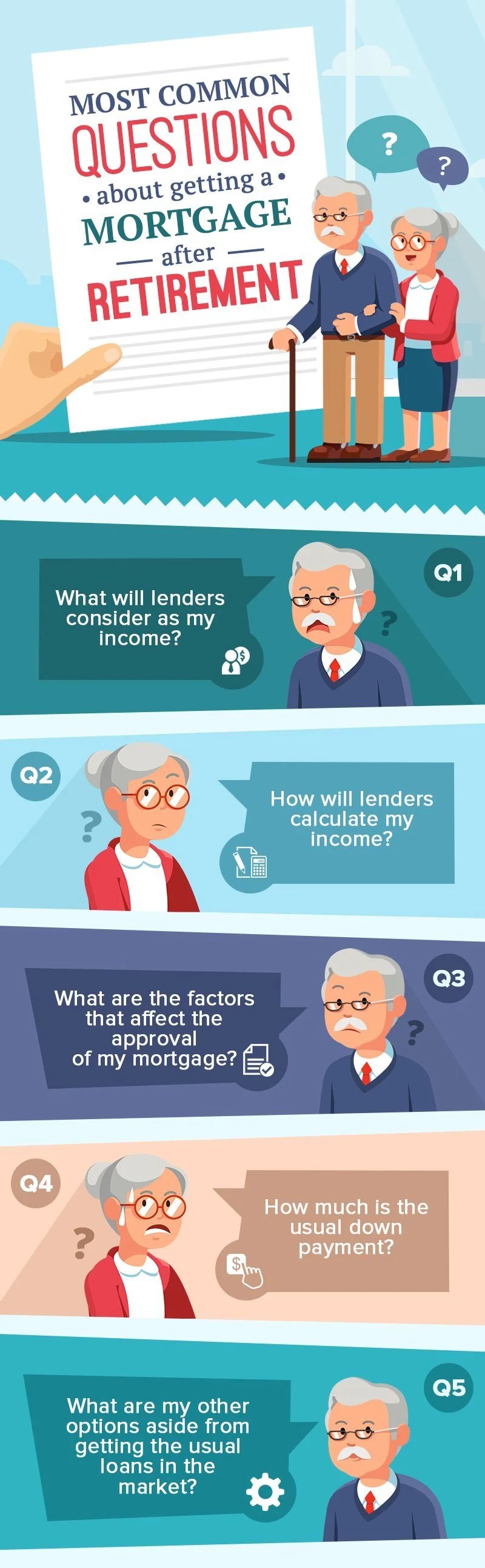
1. What Will Lenders Consider as My Income?
-
Income from a regular or part-time job
-
A brokerage account or retirement savings
-
Transfer payments like Social Security and your pension
-
Invested assets
-
Household income (income from non-borrowing household members)
2. How Will Lenders Calculate My Income?
If you are not employed, lenders generally use two methods to calculate your income. Transfer payments will be included in both methods.
-
Asset depletion method: Lenders calculate the current aggregate value of your invested assets, subtract the down payment and closing costs, take 70% of the remaining amount, and divide it by 360 (the number of months in a 30-year mortgage).
-
Drawdown from retirement method: If you’re at least 59½ years old, you can present documents or receipts that verify recent withdrawals from retirement accounts.
3. What Factors Can Affect the Approval of My Mortgage Application?
-
Credit score: Most lenders require a credit score of at least 780. Higher scores improve approval chances and may get you better interest rates.
-
Debt-to-income ratio (DTI): Includes car payments, credit card minimums, projected house payment (principal, interest, property taxes, insurance), alimony, and child support. Ideally 36% or lower, with no more than 28% going toward the mortgage. Lenders generally accept up to 43%.
-
House expense ratio: The sum of mortgage principal and interest, property taxes, mortgage insurance, hazard insurance, and association fees divided by pre-tax income. Should not exceed 36%.
-
Post-closing liquidity: Lenders usually require enough liquid assets to cover at least 6 months of housing expenses after closing.
4. How Much is the Usual Down Payment?
The down payment amount depends on the method used for determining your income.
5. What Are My Other Options Aside From the Usual Loans?
-
VA loans: For veterans or military spouses, offering 0% down payment and low interest rates.
-
Reverse mortgage: Also called the Home Equity Conversion Mortgage (HECM) for purchase program, repayment is delayed until the home is sold or the borrower passes away.
Tips for Getting a Mortgage After Retirement
-
A mortgage for your primary residence usually has a lower interest rate than one for a vacation or investment property.
-
Make extra mortgage payments if possible to shorten the term, reduce interest, and lower future monthly payments.
-
Withdrawing a large sum from an IRA or other tax-deferred plan for a down payment may place you in a higher tax bracket.
-
Plan for potential increases in property taxes, inflation, medical emergencies, and health insurance premiums. Ensure you can still meet your mortgage obligations in these situations.