
As you approach closing—the pinnacle of your home buying journey—you'd want nothing to go wrong. But with many hurdles or complications that could get in the way before you finally hold your house keys, expect the process to be more stressful and overwhelming.
With a real estate agent by your side, you’re at least assured that the closing will be streamlined and more bearable. But still, you have to know what to expect and do some legwork to help make it go as smoothly as possible.
Here are several things you can do to prevent potential problems and close the deal with fewer hiccups:
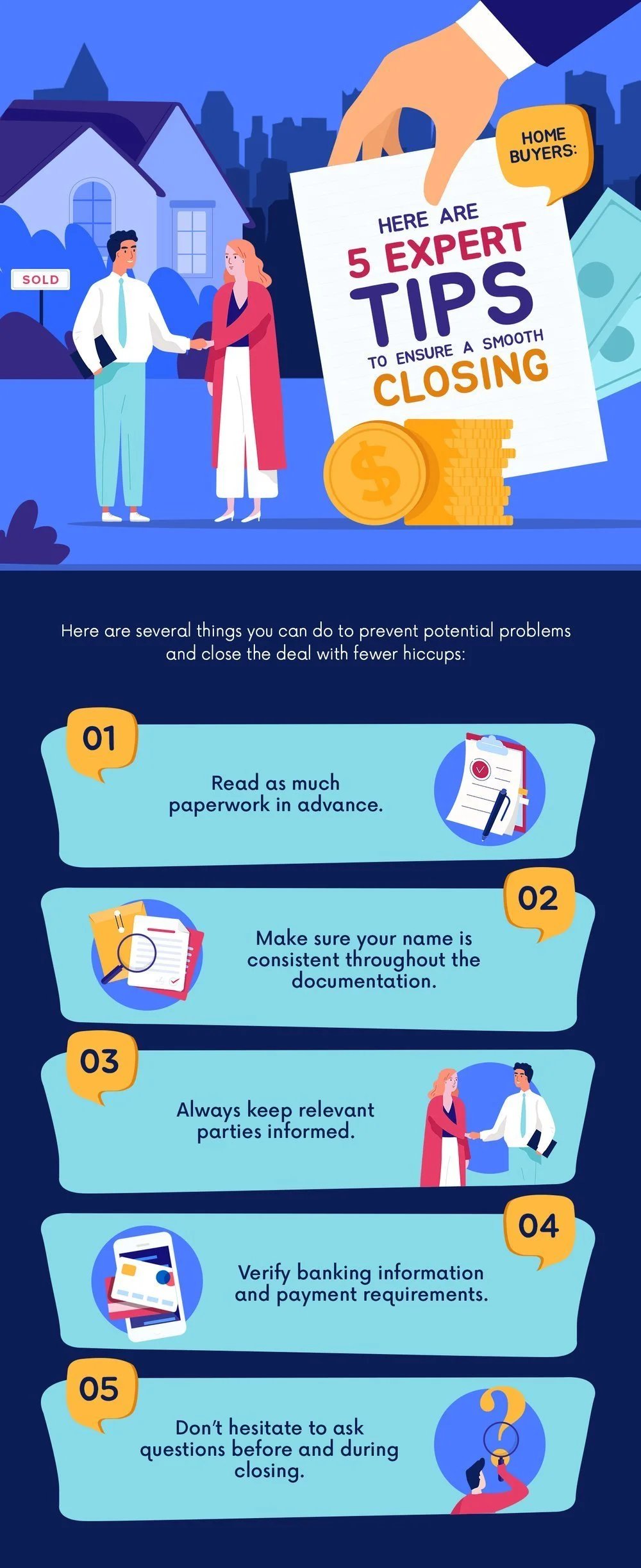
1. Read as Much Paperwork in Advance.

Last-minute delays at real estate closings are often caused by problems with paperwork. You’re making the biggest purchase of your life, so it's critical you understand every detail of your contracts.
Get a head start on reviewing the paperwork as much as you can. Read every word carefully in the documents and emails being sent to you, and read everything again if needed.
Doing so will give you time to make notes, ask questions, or address misunderstandings before closing day. This way, you won’t be stuck looking over documents while everyone is waiting. While there’s nothing wrong with taking your time, rushing could cause you to miss important details.
2. Make Sure Your Name is Consistent Throughout the Documentation.
No alias, nicknames, or stage names are allowed in real estate transactions. You’ll be required to provide a government ID at closing, and if the name on your ID doesn’t match your paperwork, you’ll need to either update your ID or redo the paperwork.
This often happens when buyers have recently changed their names due to marriage or divorce. To avoid delays, make sure your state-issued ID has your current name and check the spelling on all paperwork. Always share your full legal name with your lender, agent, and title officer.
3. Always Keep Relevant Parties Informed.

A real estate deal involves more than just the buyer and seller—it includes the buyer’s agent, seller’s agent, lender, title representative, and sometimes an attorney or accountant.
If anything changes before closing—such as a job change, furlough, or a last-minute repair agreement—your agent and lender need to know. Your paperwork must reflect these changes to protect you and avoid delays.
4. Verify Banking Information and Payment Requirements.

Before sending funds via wire transfer or cashier's check, confirm payment requirements and verify transfer details.
In addition to your down payment, you’ll have other closing costs to pay. Ensure you know the exact amount and payment method, which the title company or attorney will provide.
If you’re wiring funds, remember—wire instructions should never be emailed. Always call your attorney or agent to confirm. This helps you avoid wire fraud and ensures you’re sending funds to the right person.
5. Don't Hesitate to Ask Questions Before and During Closing.

If there are any terms you don’t understand—ask. No question is too small in real estate.
Even experienced buyers can feel overwhelmed. To reduce stress, call the title company before closing and have them walk you through the process. Clarify anything that’s unclear and prepare questions for your agent and title officer.
These steps help ensure a smoother closing day experience.